Typography contributes to setting the tone of a design. It can assist the viewer’s understanding of whether a design is corporate, informal, classical, or modern. McCarthy and Mothersbaugh (2002) suggest that typography can affect how consumers process information, they also propose that typography can be an influencing factor as to whether the target audience of a design interacts with it.
This blog post will be exploring how typography can improve or worsen crochet book covers by examining a good example of typography, then improving a poor example of typography and analysing the changes.
Good example
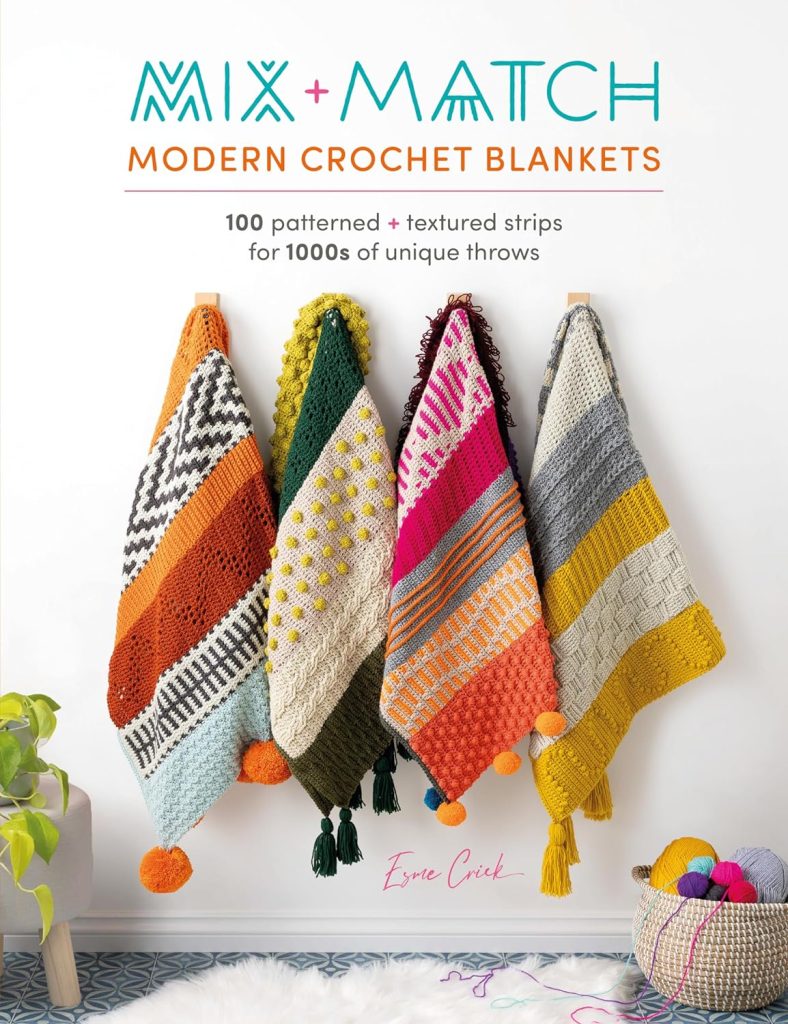
Mix and Match – Modern Crochet Blankets is a book filled with crochet patterns that allow the reader to create unique, modern blankets. Even though the title of the book uses a unique font, it is still clear and easily readable. The typography of the book title is a sans-serif font, much like crochet, sans-serif fonts have existed for a long time; according to Garfield (2010:42) “sans-serif lettering existed in the Ancient World” however they are viewed as more modern, contemporary font type, which is in keeping with the name of the book and therefore confirms that the reader can expect a modern take on crochet. The overall aesthetic of the typography is fun and creative.
The typography used for the book’s heading makes use of conceptual design. The font used for the words ‘Mix + Match’ has additional linework that could be interpreted as crochet stitches, particularly within the word mix. Similarly, the usage of a ‘+’ symbol instead of the word ‘and’ could also be a symbol of a crochet stitch. In addition, the zig-zags, stripes, and strips made by the linework on the text act as an example of the patterns on the blankets that the readers will be making.
The designer of the book cover has adapted the tracking in the heading, this ensures the space at the top of the book is filled whilst also assisting in the heading being clean looking and legible.
The author’s name is at the bottom in a smaller cursive font, this almost appears as a signature which gives a personal touch to the book cover.
The typography is colourful, each colour used in the heading and subheading has been picked from the colours of the yarn that is included in the book’s imagery. This gives a cohesive feel to the front cover.
Poor example
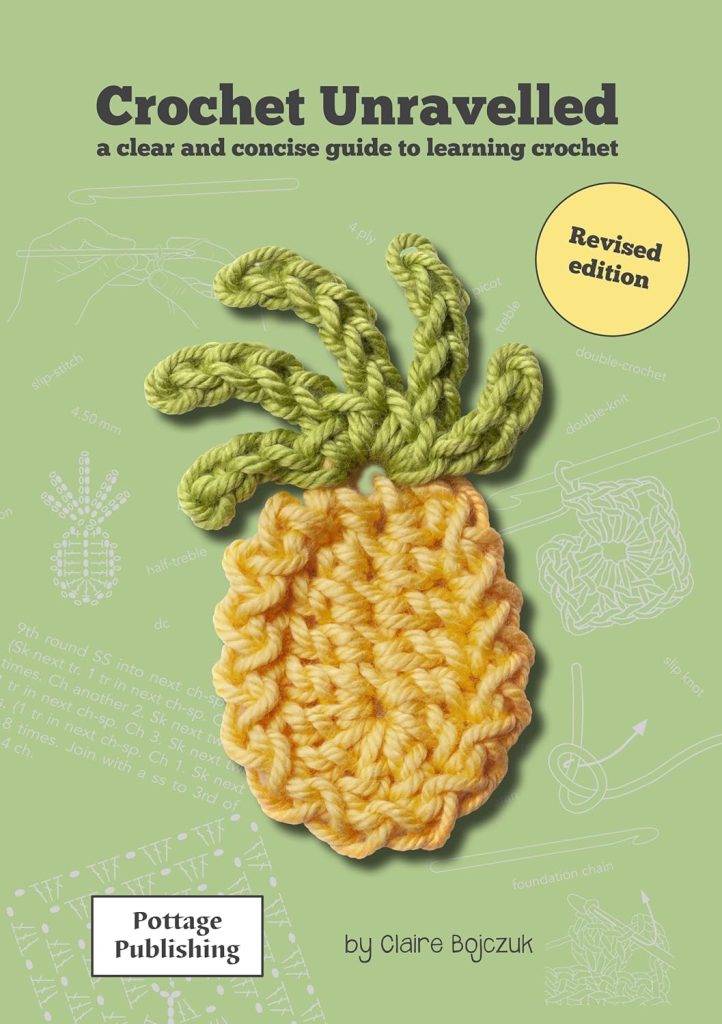
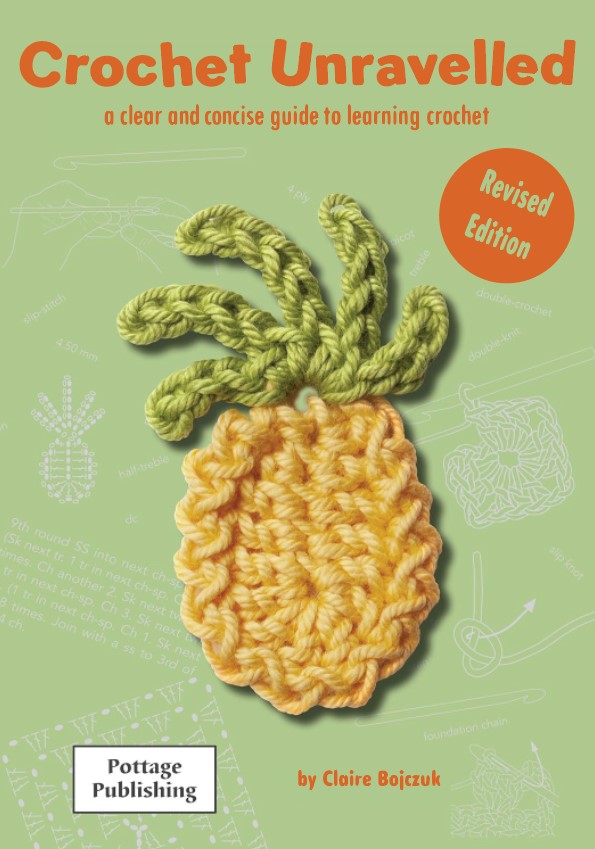
The cover of the book ‘Crochet Unravelled’ is not aesthetically pleasing, the colours are dull, the composition is not exciting, and the book would not stand out on a shop shelf or online to anyone. The books aim is to teach crochet basics to beginners, meaning that the target audience is probably a younger one. The typography used for the book title Crochet Unravelled is a bold serif font, which is a more traditional font.
On the revised version the chosen font is sans-serif, the reason behind choosing this font is to appeal to a younger audience and give a more modern finish to the book cover. In addition, the corners on each letter have been rounded using Adobe Illustrator to match the texture of the crocheted pineapple on the cover. The font used for the revised version is called ‘Gambado’, this is a bounced font rather than letter-by-letter, which is a visualisation of how yarn would look when unravelled.
On the original cover, the kerning of the heading is close and uneven, with some letters being closer to the next than others, for example, the letters ‘oc’ in crochet. Whereas, on the amended version the heading is more evenly kerned.
The orange colour chosen for the text on the amended version of the book cover is to embrace the tropical feel of pineapples.
References
Bojczuk, C. (2013) Crochet unravelled. Essex: Pottage Publishing.
Crick, E. (2023) Mix and match: modern crochet blankets. Exeter: David & Charles.
Garfield, S. (2010) Just my type: a book about fonts. London: Profile Books.
McCarthy, M. S. & Mothersbaugh, D. L. (2002) Effects of typographic factors in advertising-based persuasion: A general model and initial empirical tests. Psychology & Marketing, 19(7-8), 663-691.