Within this blogpost I will be presenting a series of protest posters that demonstrate the fight for equal rights at the beginning of the 20th century. Published by the Artists Suffrage League, designed to encourage societal change during a period of oppression for women, which affected their rights. I will be evaluating how these works visually communicate the messaging.
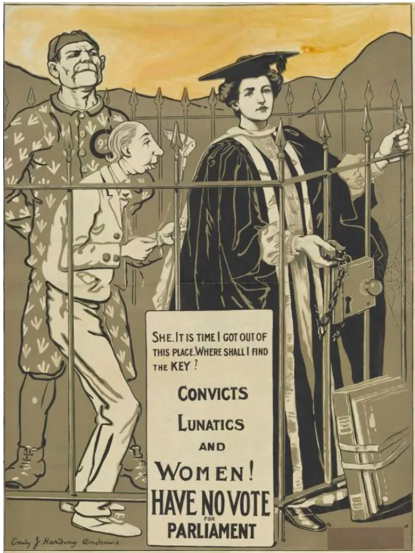
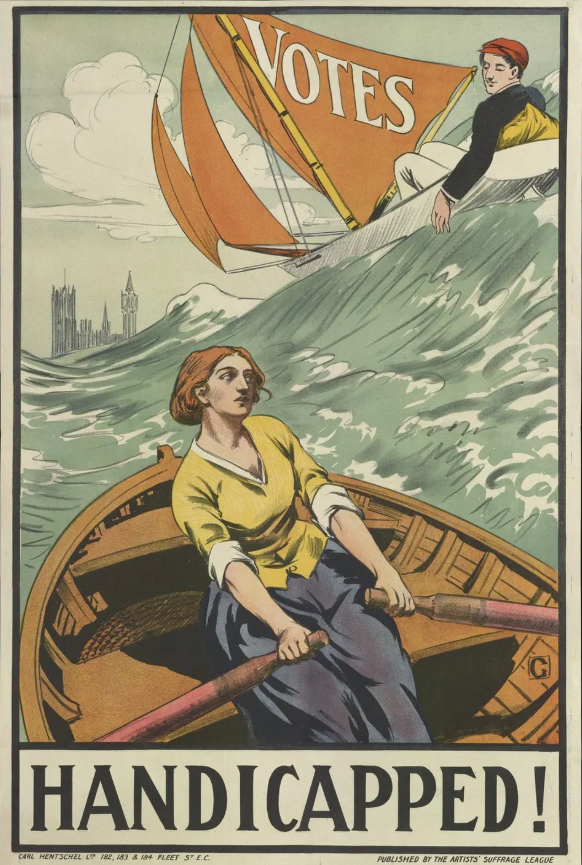
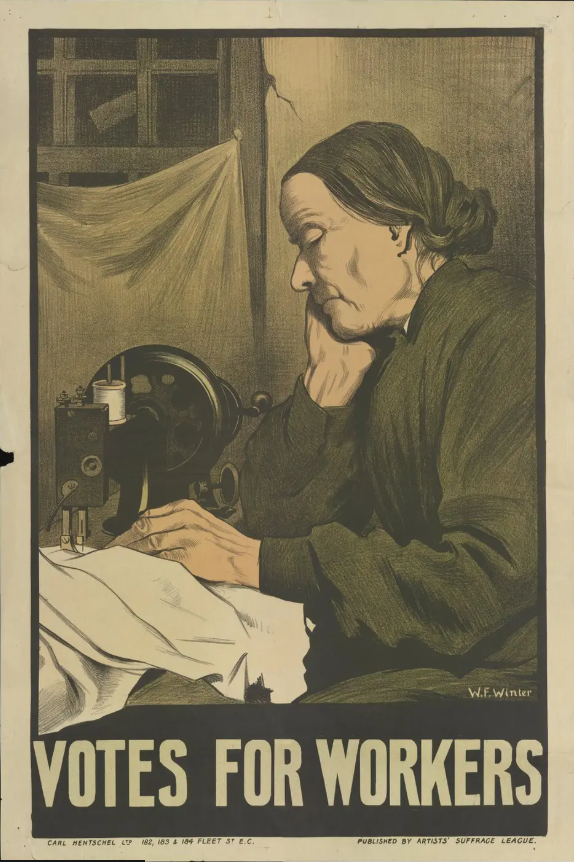
The above posters reflect the popular art movement during this period, art nouveau. Art nouveau was used to express a want for change in society, it was “sought to capture the sense of a break with how things had been done before” (Ashby 2022:1). When finding other examples of art nouveau there is a common theme when the work features women at the for front, the palette incorporates playful colours, floral backgrounds and curvy typography that blends in with the composition. The above work contrasts this by including a more realistic background and a smaller colour palette with less saturation. This feels like a decision that was made to communicate the serious messaging to a broader audience and to demonstrate the real-world lives of the women that were being affected by the gender disparity. The typography is bold and framed to stand out, ensure readability and send a clear message. During an interview with the BBC, Delap, a historian specializing in this period, explained how these “posters took inspiration [from] the tabloids” (BBC, 2018) meaning that the style was in keeping with current trends and was eye catching for a wide audience.
As a form of visual communication, the illustrations within these posters convey a clear message of the unfair advantage men had over women. Women were fighting against the tide, working in poor conditions and had rights equal to ‘convicts’ and ‘lunatics’. The designs represent a wide array of women, including upper class, working and educated intellectuals, each with the common issue that men are making the decisions that impact their lives.
This campaign is a clear example of design for positive change, as mentioned in the above quote, the use of image can send clear messaging and evoke feelings that motivates change. Education is a vital part of social change, and the creation of these posters share knowledge amongst all the women viewing them.
References
Ashby, C. (2022) Art nouveau: art, architecture and design in transformation. Bloomsbury.
Artists Suffrage League – Various Artists (1910) Votes for women [Poster]. https://www.bbc.co.uk/news/in-pictures-42875095 [Accessed 9 Feb 2026].
Artists Suffrage League – Various Artists (1910) Votes for women [Poster]. https://www.itsnicethat.com/news/womens-suffrage-posters-right-to-vote-1918-graphic-design-060218 [Accessed 9 Feb 2026].
Sheppard, A. (1990) Suffrage art and feminism. Feminism and Aesthetics, 2(5), 122-136.