During the research phase of the tax the rich animation I found various inspirations for my work. These are all examples of relevant animation history and will be discussed throughout this post.
Inspiration
When I had decided on the style for my animation, I discovered various clips that I could draw a connection to the topic chosen.
When watching this clip by Sandra creates the phrase “are you feeling the pinch?” sprung to mind. It perfectly represented a disgruntled person being squashed into financial hardship by growing wealth inequality.
This animation by Anar wonderfully communicates the message of a stressed person and I felt inspired by the drips of sweat. I thought that they would make the ideal transition to the next scene, shown below.
This animation by Sarhan was included as inspiration as it demonstrates the feeling of anxiety that people who are struggling feel and represents the UK economy dropping off a cliff.
This animation inspired my storyboard as it displays unity from a diverse group of people. However, due to time restrictions it was not included in the final animation.
This style of typography was included in the animation because the layering looks like stacks of money. The typeface I chose was sans serif to ensure it was easy to read and easily communicated the message.
This section of Saul Bass’ title sequence inspired my animation, the movement is simple and effective and was used in my animation to reveal a solution.
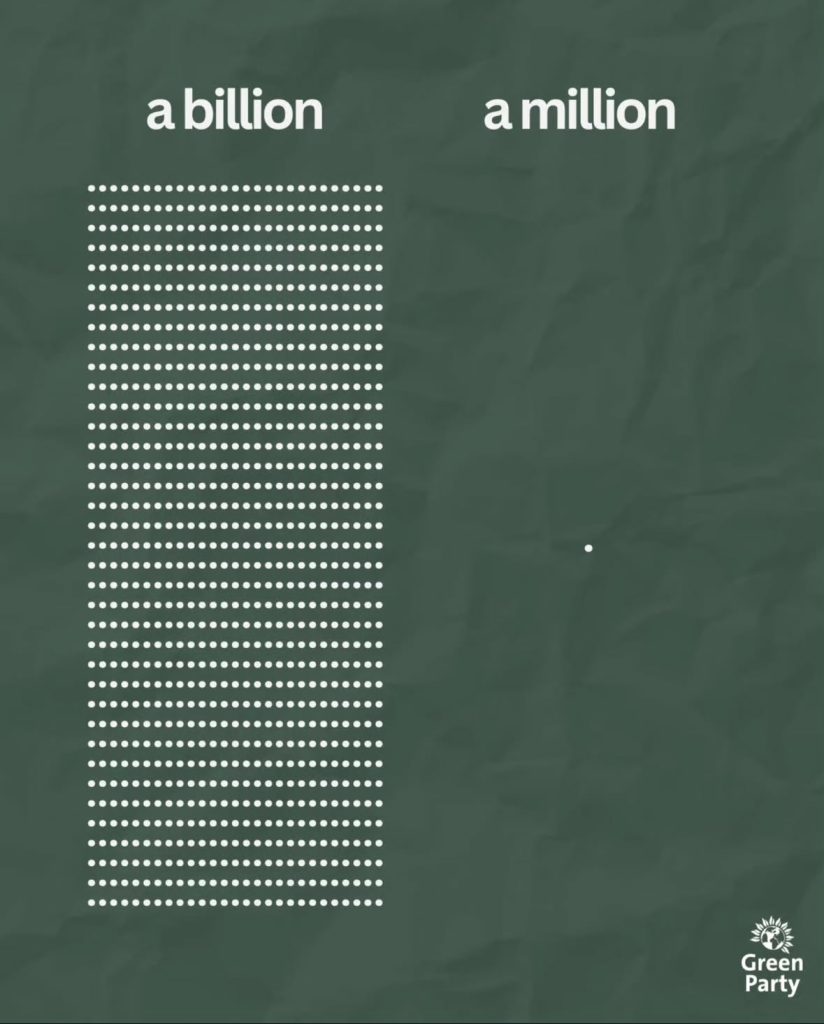
Another element that was included within my storyboard was the above visual that communicates the vast amount of money that the richest in our society hoard. The visual makes use of micro/macro by showing the bigger picture through use of small individuals and comparison. The Harvard Business Review (2016) suggests that the key to making extreme numbers resonate “is finding the right scale and the right approach”. And this is a great example of making a large number resonate. Again, I was unable to include this visual due to the animation length.
The next post will include my tax the rich animation.
References
Anar, S. (2025) Math major [Video]. https://uk.pinterest.com/pin/909656824735820232/ [Accessed 25 Apr 2025].
Harvard Business Review (2016) How to make extreme numbers resonate. https://hbr.org/2016/01/how-to-make-extreme-numbers-resonate[Accessed 7 Apr 2025].
Kelly, J. (2021) Handshakes [Instagram]. 10 November. https://www.instagram.com/p/CWEyXBoIAUJ/?igsh=azFpMHlqcHVhNnE4 [Accessed 25 Apr 2025].
Rizzo, F. (2010) It’s a mad mad mad mad world – title sequence by Saul Bass [Video]. https://www.youtube.com/watch?v=s1A7bJD3atk [Accessed 27 Mar 2025].
Sandracreatess (2025) Animated illustration [Video]. https://uk.pinterest.com/pin/795026140504124044/ [Accessed 27 Mar 2025].
Sarhan, Q. (2025) Rollercoaster day [Video]. https://dribbble.com/shots/4962678-Rollercoaster-Day [Accessed 27 Mar 2025].
Visa (2025) Money is changing [Video]. https://uk.pinterest.com/pin/909656824729435392/ [Accessed 28 Apr 2025].