Part One: Lab Exercises: Exploring Emerging Technologies and Immersive Design
This post will be walking through the various emerging technologies explored throughout lab sessions. The second part of this post will be a plan for my emerging research project based on the outcomes from the lab sessions.
When this module was introduced, I was speculative having never used a virtual reality (VR) headset before I wasn’t sure how this could be used to advance my graphic design skills and felt that VR headsets were more closely aligned with gaming. However, when carrying out research it became clear that extended reality (XR) will become a major part of design, through augmented reality advertising campaigns, onboarding employees with virtual training, virtual exhibition scenes that support physical exhibitions and so much more. When using a VR headset, I developed an understanding of how this technology can be utilised within a graphic design environment.
360° Content
During the first lab session a tutorial was followed to create a 3D model of a table with basic shapes on using Maya. This was then converted into a 360-video uploaded to YouTube:
When creating the 3D model in Maya, I was taking into consideration multiple factors that would affect the user experience (UX) of the video. To add an element of depth to the immersive experience I wanted to introduce a background, I selected a HDRI but when uploading it the light exposure was too bright.
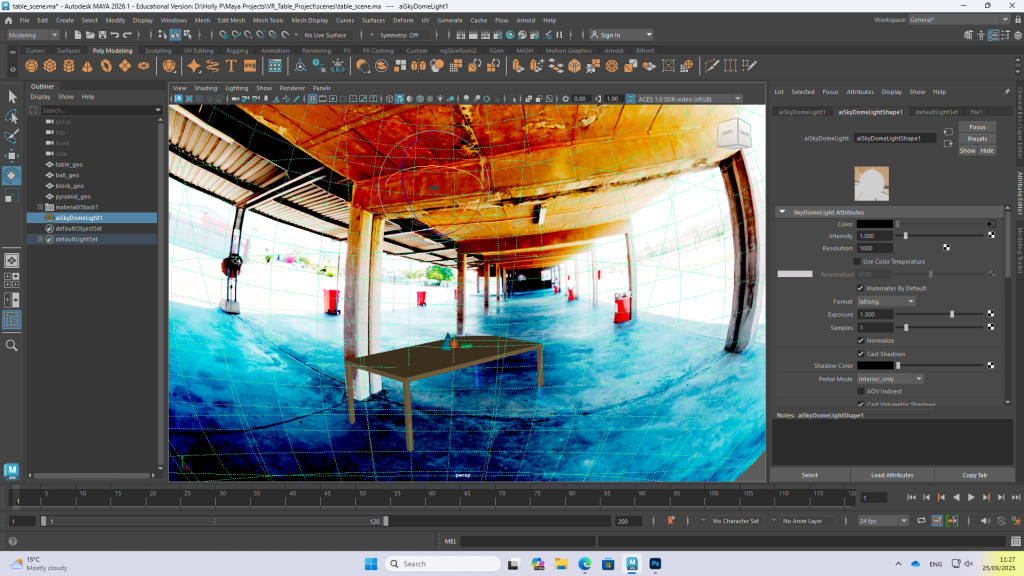
The lighting could hugely affect the UX, when using a VR headset certain users experience VR sickness which can induce headaches amongst other symptoms. If the lighting is too strong or in the wrong place this could cause problems for the user.
To experiment further with the 360 videos, I used assets already created for a previous project and included MASH dynamics. Below is a storyboard I created in order to plan the narrative for the immersive environment, which includes prompts to show the user where to look.
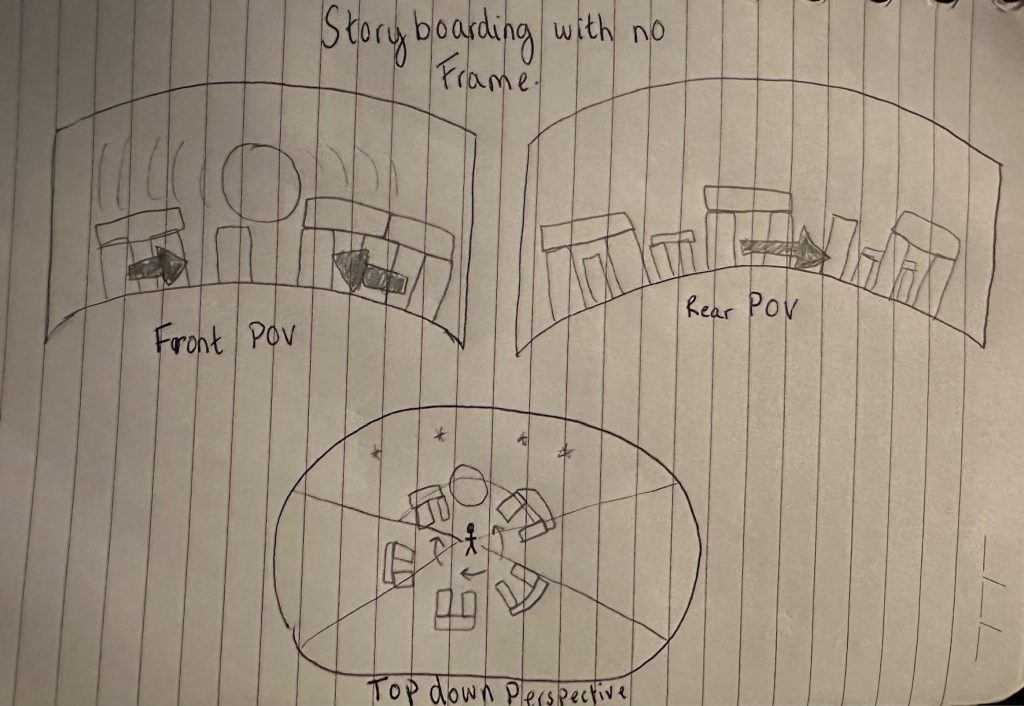
Leitch (2017) discusses the difficulty in storyboarding for VR because a 360 scene is spherical and does not fit in standard rectangular frame by frame storyboards. Leitch’s article is where I found the idea to create the storyboard displayed above, with a front and rear POV and a top-down perspective.
The asset I had from a previous project is a recreation of Stonehenge made of cheese (original video linked here). The moon is looming over Stonehenge and the ground is set to be grass and there are stars up in the sky which meant that users would be able to look all around and feel immersed in their location. Placing the camera at the right point in this scene so that the moon was easily visible to the user was my first step. I then included keyframed arrows to point toward the moon ready for the MASH effect to ensure the user was educated as to where to look and when. I introduced a MASH node and my aim was to have the singular moon turn into multiple moons that orbited the Stonehenge. I then uploaded this to YouTube, please see below:
The movement and story flow did not work as I intended, there was no motion at all. Additionally, a flaw to this method of immersive technology being uploaded on YouTube is the resolution of the contents. Even when rendered to an extremely high resolution the videos on YouTube appear very blurry. After carrying out research, this appears to be an issue that is caused by the stretching of imagery to make it 360.
In general, I have noticed from research that the graphics within VR are behind in terms of fidelity. Johnston (2019:18) makes the point that “the nature of VR means that we have to generate two images (one for each eye) at, ideally, more than 90 frames a second” which takes longer to create. He continues to say that “stylisation and working within the bounds of technology can often bring out the best in a piece.” This would have to be contemplated when creating a campaign that is purely virtual reality.
Throughout this exercise I have tried to consider how this method of creating 3D graphics to create 360 videos can relate to graphic design and even after carrying out research I feel that this method is more aligned with game design. There are other aspects of XR that are better suited to graphic design uses, such as mixed reality, 360 camera recorded experiences or pass through VR and AR experiences like the example below.
WebVR
During the sessions on WebVR we explored Frame VR and Spatial.io, both of which are a similar concept. In the lab session I experimented with a basic gallery style room and included pieces of work I have previously created.
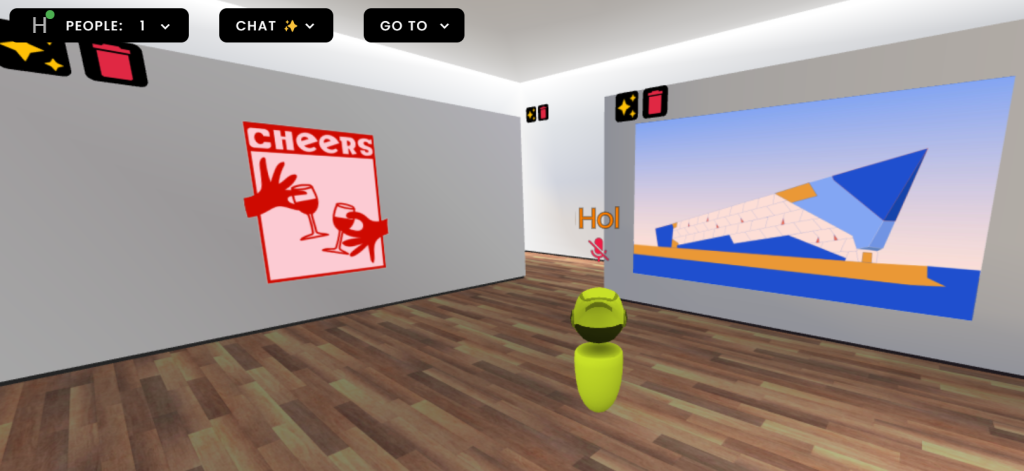
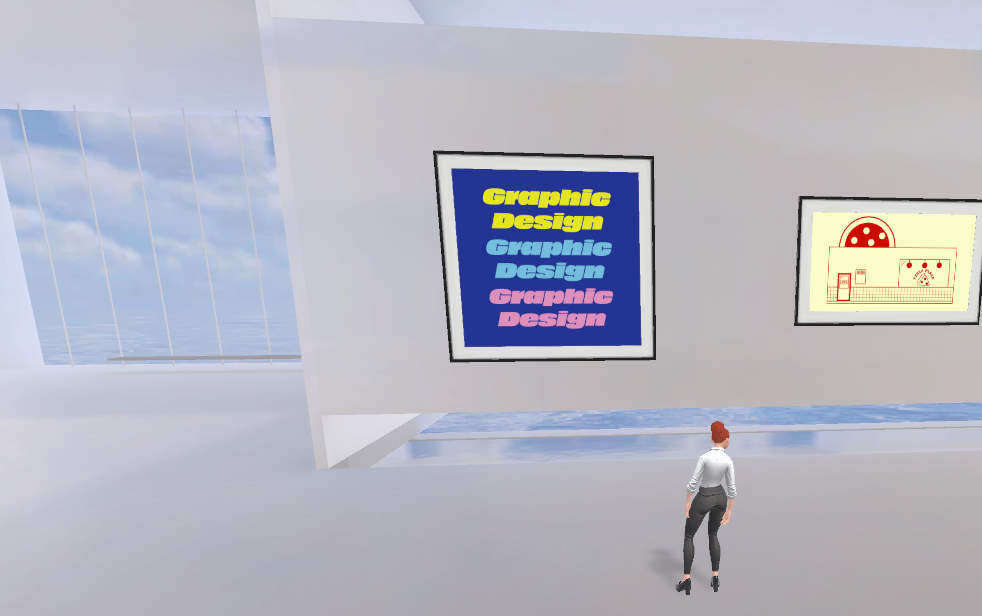
Using these web VR platforms sparked the idea, could I make something more immersive for the user by including 3D models? This inspired me to research exhibition stands and consider what bespoke spaces could be created through making 3D models that are made with the purpose of displaying design work.
After the first 2 lectures covering an introduction to XR, narrative and UX within immersive content I considered how the learnings so far could enhance my graphic design skills. I listed possible projects that could be carried out during this module.
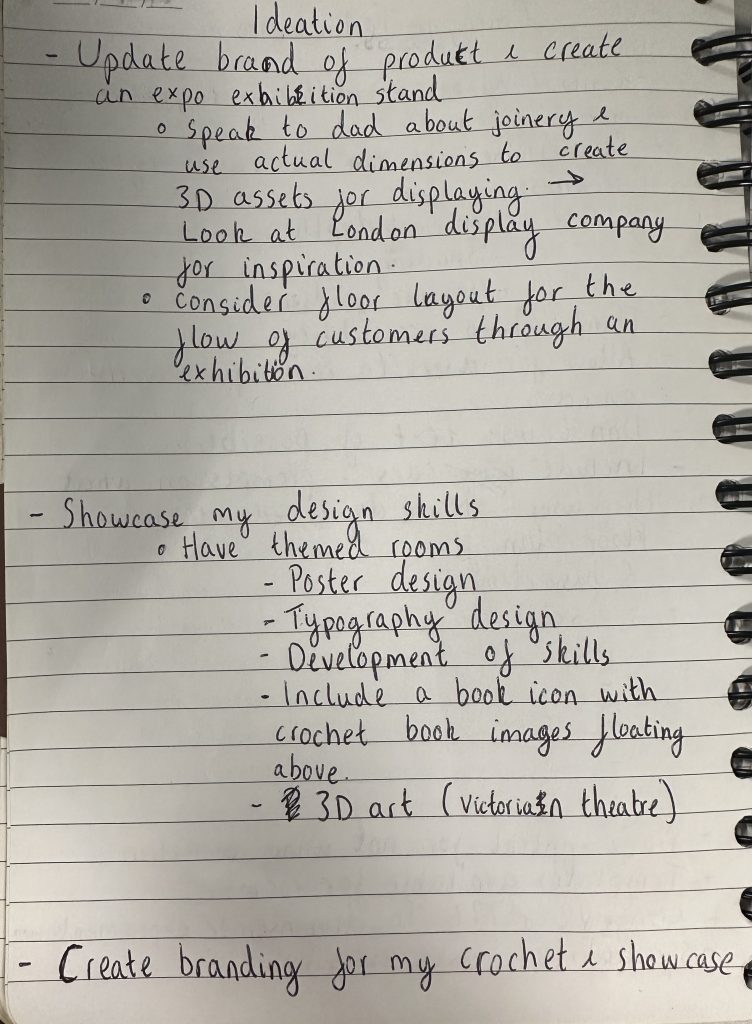
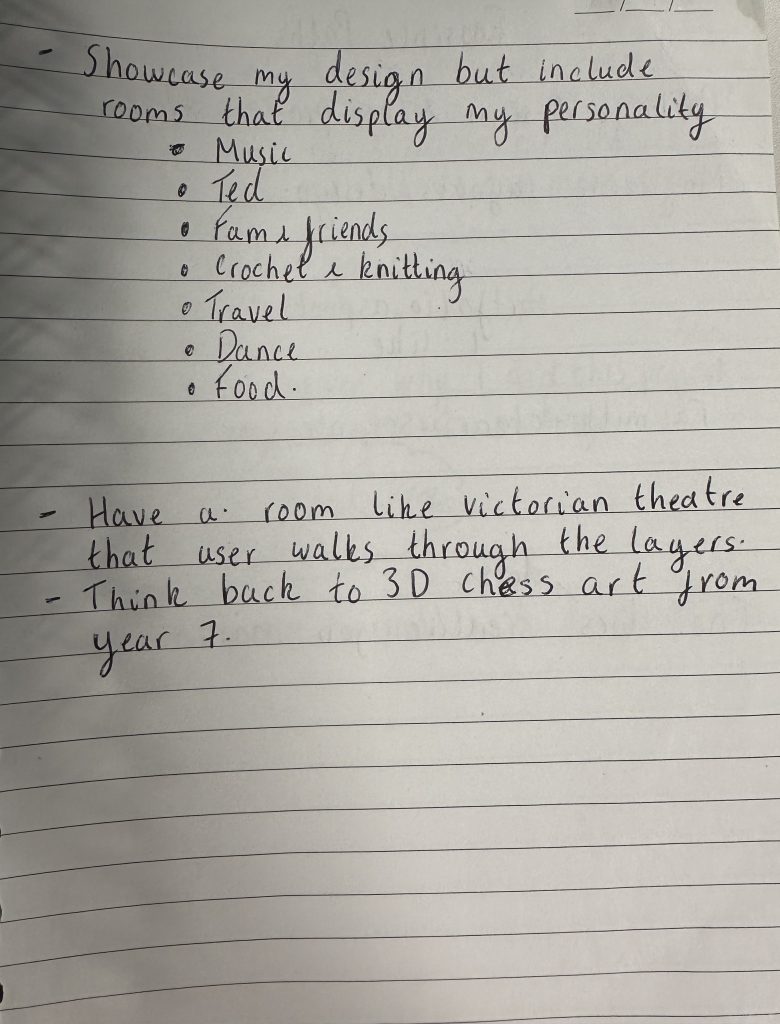
Exhibitions are a key industry to create immersive landscapes using VR, from museums to commercial expos they allow for accessibility and immersive storytelling. A good example of an augmented reality exhibition is the MACHINE-A London Fashion Week Instagram filter.
When looking for a good case study specific to Frame VR there was nothing available. They have a page of case studies with examples of large organisations (e.g. Coca Cola) utilising Frame VR but from a design perspective they were not up to a good standard. Spatial.io have been used by Absolute to create an immersive marketing campaign but this felt gimmicky, and game driven. I would like to demonstrate that Frame VR can be used by designers to promote their work in a unique and immersive way.
Augmented Reality (AR) & UX
To explore augmented reality 8th Wall was used. I followed a tutorial on creating the earth with the moon orbiting it.
My next task was to experiment with image tracking, however when following the instructions one step didn’t match, there was no QR code, meaning I was unable to test the image tracking on my phone.
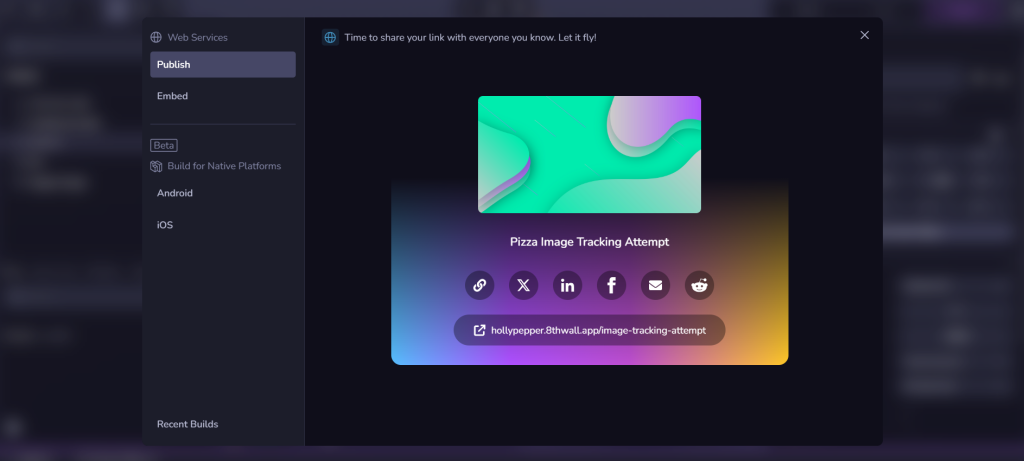
When looking for tutorials online it was difficult to find many straightforward tutorials for 8th Wall’s software. This is a disadvantage of using this platform for the proposed project. Which is a shame because in terms of opportunities for AR within the design industry there are countless.
If I had been successful, I would have created a flat image poster that when scanned became a 3D visual that users could tap to move around. Hillmann (2021) states that “UX design for handheld AR has to consider the fact that the environment is part of the design context.” Meaning that a main UX consideration when using this method of XR is to consider the possible surroundings and environment of the user.
Another interesting point about the usability of AR is that many users are unfamiliar with AR, Behnam and Budiu (2022) make the point that “the user needs to be able to easily see the AR 3D objects, environment, and the prompts that guide [them] through the AR experience.” When carrying out research I have discovered a few AR campaigns for products that I purchase, and I had no idea that they had AR features when scanned. These campaigns should maybe include a more significant prompt for the user to educate them.
Please see below a couple of interesting case studies of AR being used within marketing campaigns:
AR campaigns seem to be a crucial part to the future of design, with the next generation having grown up surrounded by technology, this type of immersive interaction is a part of their life. Spatial.io (2025) states that “76% of Gen Z want brands to create experiences that let them explore and express themselves”. Showing that there is going to be a growing requirement for immersive campaigns such as AR.
VR Art & Immersive Storytelling
For this session we created VR art using various software. My preferred software was Open Brush; I experimented different techniques and settings and created basic 3D drawings.
When creating this artwork rather than considering the UX of my creations I was using it more to explore and experiment with different methods. This is an immersive experience that could benefit the users who are making the art as a therapeutic creative outlet. In addition, this form of immersive design works extremely well for collaborative product design, as it allows multiple people to log in to one space and create designs together.
Whilst I was not considering UX when I was experimenting with VR art, there are a few considerations when creating immersive spaces for users to enter (much like all the other XR methods) examples of these are:
- Storytelling – when using OpenBrush you can create a world that users will enter, and each element is telling part of a story. Creating a flow through from beginning to end is important (flow is its own UX law).
- Ethics – is the environment created too addictive, should prompts be included to tell the user to take a break?
- Choice overload – overwhelming the user with too much choice or audio or visual stimulation could cause VR sickness and effect cognitive load.
Summary
Exploring these methods of emerging technology has been interesting and opened my eyes to the world of XR.
Two examples of immersive XR experiences that I enjoyed most when using a VR headset are shown below:
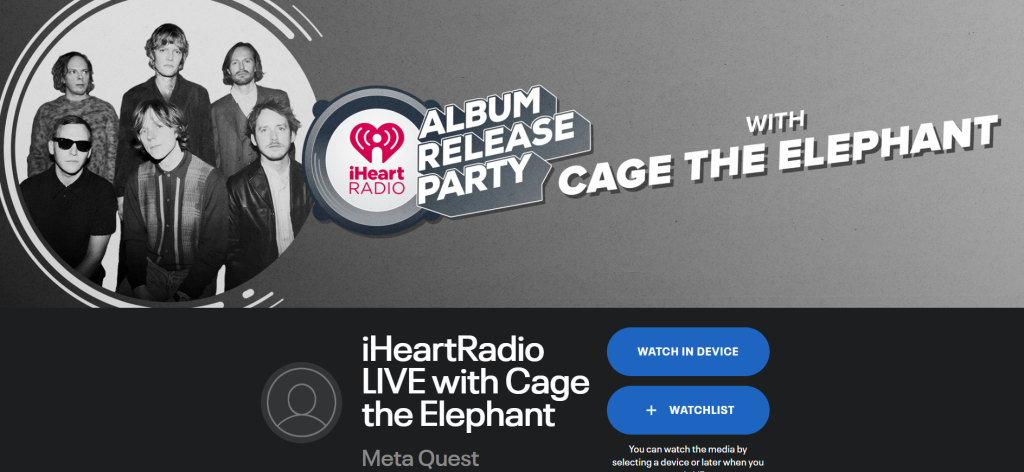
Watching this bands album release party proved that XR can be utilised to create great marketing campaigns, that will drive not only sales of the album but also increase ticket sales to the bands tour.
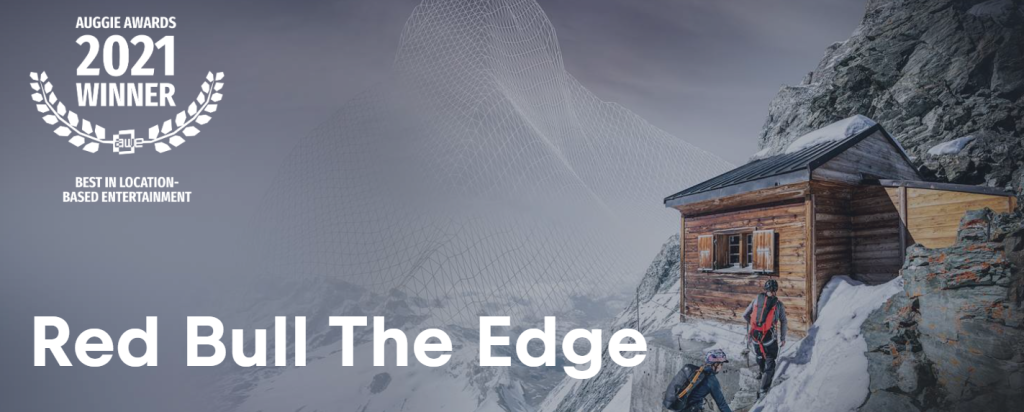
Climbing the Matterhorn with Red Bull was part of an advertising campaign promoting a mixed reality experience that people can attend in Switzerland. In which they physically climb a rock-climbing wall whilst wearing a VR headset and when they reach the top they are at the summit of the Matterhorn.
Mixed reality seems to have a better market for graphic design, UX design and marketing campaigns. It is an easier and more intuitive concept for the user (particularly new ones) to understand.
Part Two: Research Proposal: Crafting Your Emerging Research Project
Research and Ideation
For my emerging design project, I aim to create a VR exhibition that showcases my work in a unique and inspiring way. The work included will be based on personal projects that I feel reflect my style as a designer, along with personal interests, such as a small crochet business I started years ago. I will rebrand this business and create design assets that can be included within the VR space. I would additionally like to explore point of sale techniques and potentially create window displays by importing 3D modular spaces.
This project will allow me to experiment with different software and styles and create an online virtual space that can be shown to potential employees. It will demonstrate the benefits of using web VR within the exhibition market.
The audience for this project will be colleagues and prospective employees. I would like to demonstrate a variety of skills, plus my ability to implement strategic ideas and showcase my conceptual thinking. The experience provided to the audience will be fun and light-hearted, the users will experience bright colours, typographical designs and 2D animations that represent my values and aspirations. I would also like to educate the audience on certain interests, such as creating textures and patterns with wool and experimenting how that will transfer into a web VR situation, as shown in the VR art section of part one.
As this project is showcasing personal projects, I am hoping that the immersive experience reflects my personality and highlights the skills that I have.
The emerging technologies I will be using are web VR using Frame VR, 3D modelling created in Maya and imported into Frame VR and VR art created using OpenBrush. Features I would like to include can be seen below, these are based on my initial ideas and mood board included in part one, along with real world examples that I find inspiring:
Graphic 2D animations that bring the experience to life, with the possibility of pairing this up with audio to create an immersive experience for the user.
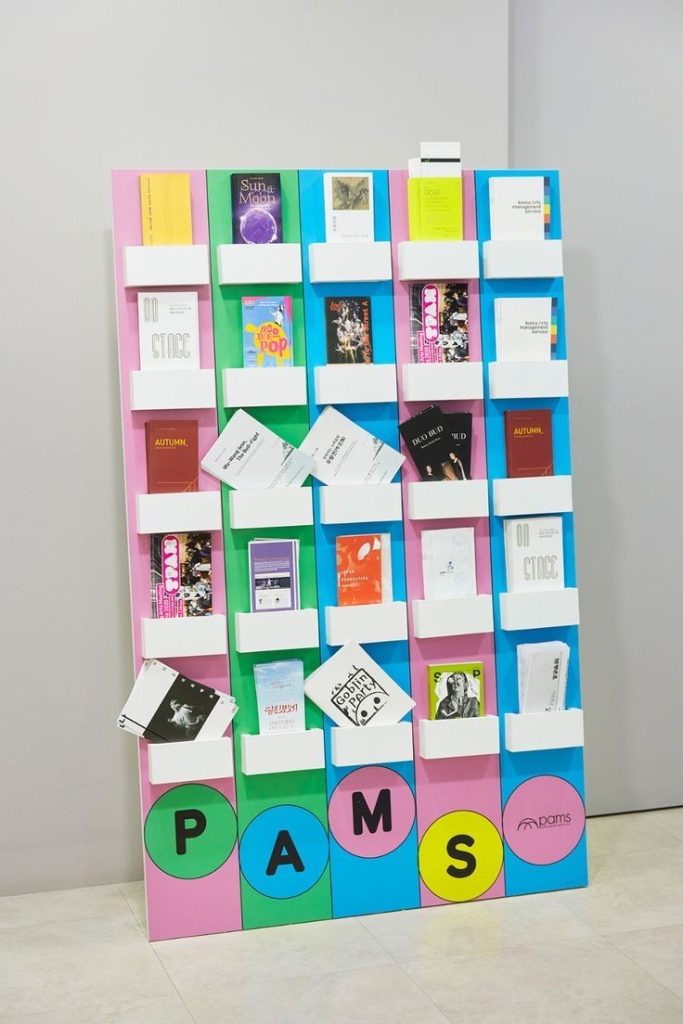
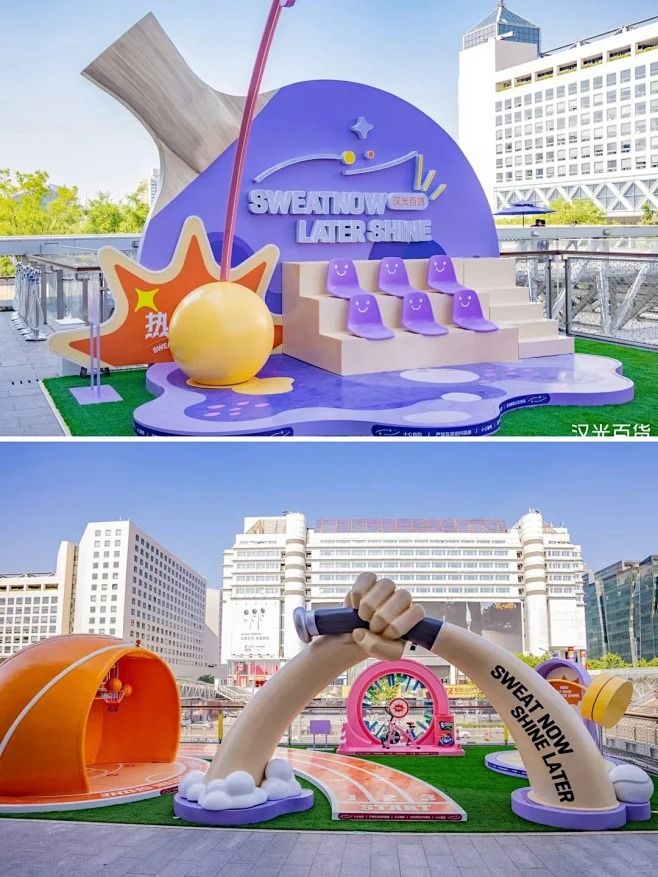
3D assets created using Maya that are UV wrapped (a technique that I will be learning for this project) including bespoke built stands and thought provoking, conversational pieces.
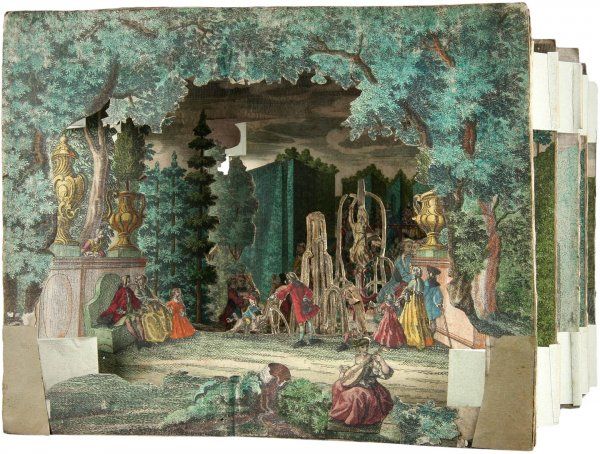
Introduction of layers to create storytelling as the user moves through.
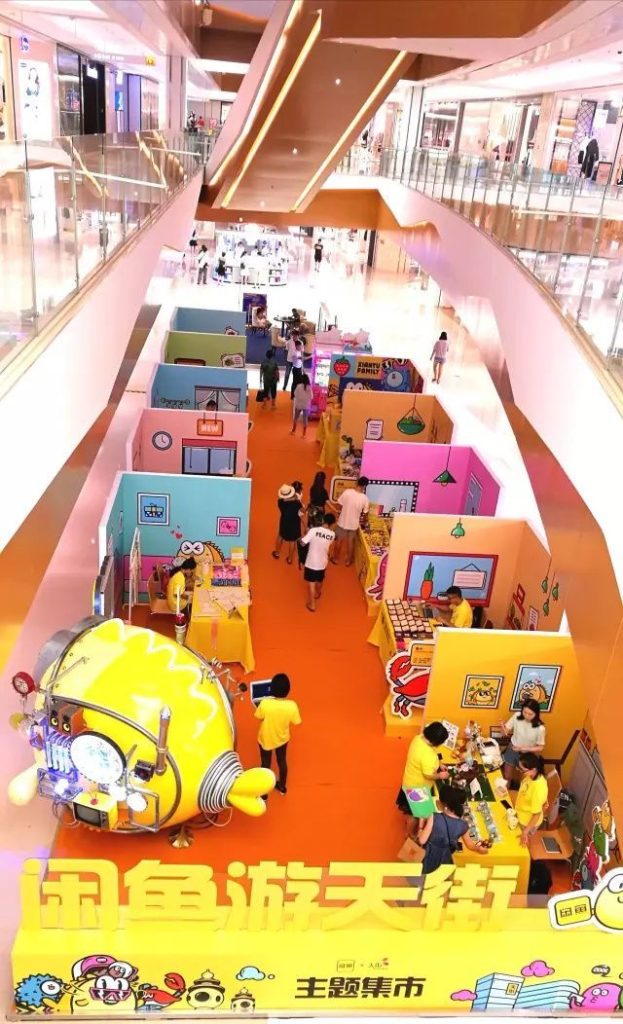
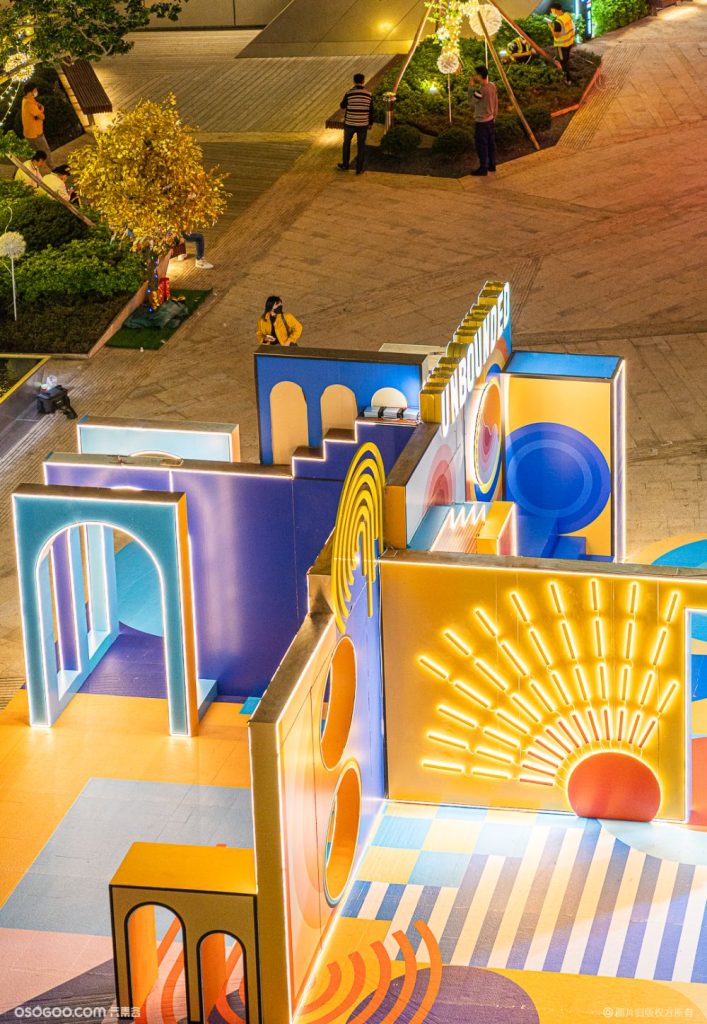
Additionally creating 3D spaces and scenes using Maya. I would like for each space created to have a theme, below are a list of possible themes:
- Poster designs
- Typographical designs
- Development of my skills (this could be part of the layering walk through mentioned above.) Telling the story of my journey and improvements as a designer.
- Showcasing my crochet business rebrand, with a gallery of projects
- VR art, experimenting with the creation of 3D textures in OpenBrush
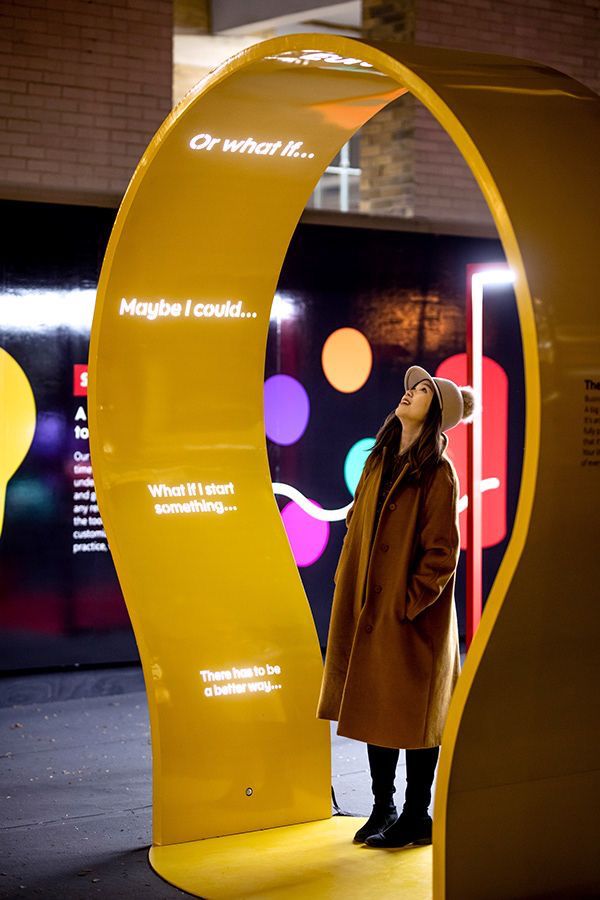
Spaces for reflection for the user. A moment for users to recalibrate when immersed in the experience. Or a space that invigorates users and encourages them to have creative ideas.
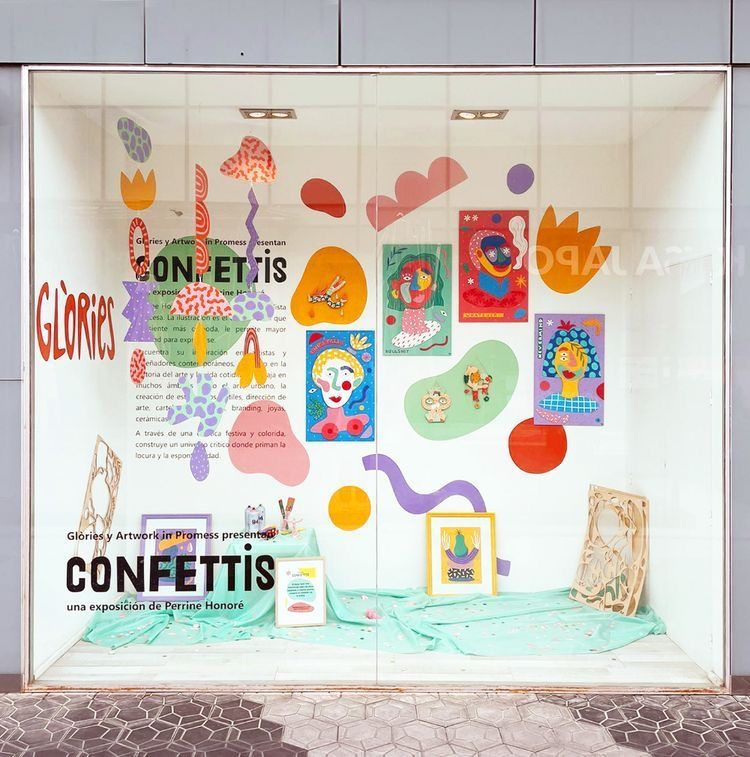
A 3D modular box with a window at the front to create an interesting window display. I would like this to promote my skills in creating corporate design solutions, that again communicates my strategic thought process when it comes to problem solving.
Ethics, Accessibility and Cultural Considerations
When creating any XR space there are several ethical, accessible and cultural considerations. Please see below a list of common considerations and how they relate specifically to this project:
- Community spaces – with Frame VR being a space open to the public, different users can enter my proposed exhibition, could people exploit this by making comments in the chat, through the microphone or with webcam use?
- Informed consent – can I display a message before people enter giving them an insight into what is included so that users are able to make an informed decision?
- Addiction and overuse – include a prompt for users to take a break if they need to.
- Psychological impact – I like bright colours, but certain users might find this draining, maybe consider having the reflective spaces as calm areas with less colour? Possibly a mindfulness area, with designs that prompt breathing and audio that’s calming.
- Accessibility – Lots of bright colours but how will this affect users with vision impairments? Will they loose out on aspects due to it not being accessible?
There are other ethical considerations however, with my proposed project being web VR as opposed to in a VR headset some of the ethical considerations are not as related.
User Experience
There is plenty of crossover when working with standard UX design and taking those theories over to XR design. To ensure I meet the UX design laws I will discuss how I can implement them now.
UX for XR issues such as VR sickness can be avoided by using Web VR, whilst there is the option of using Frame VR within a VR headset, primarily it will be done on a computer screen. Which will help the user avoid VR sickness. Additionally if the user was within the VR headset they have control of where they are going which will prevent motion sickness.
With there being different spaces, I have created a floor plan (shown later) to explore how the traffic would flow through. Also, I would like to have a site map as part of the experience, so the user understands what to expect and where to go for certain work. To enhance the UX, I am also considering the possibility of including arrows and signage or room numbers similar to in a museum to prompt the user through the experience.
To gain a non-bias user experience I will be regularly asking for feedback from peers to determine whether any elements need adapting or any considerations have been missed.
With my concept having several different elements to be included it is important that I consider Hick’s Law, by giving the user a complexity of choices, users may spend more time making decisions. When designing this space, it is important that I step back and take a wholistic look at the immersive space, look at the work as a macro design.
Due to me utilising Frame VR the usability is quite straightforward for the user but by creating a site map and having prompts this will improve the user’s navigation and help with efficiency.
Project Plan
To manage this project in an organised and efficient way I will be making use of the agile organisational system.
Project Goals, Deliverables and Scope
To ensure this project is completed to the standard I intend, within the timeline I must consider the scope of the project. During the research and ideation phase multiple ideas were brought forward but due to time restrictions not all will be carried out.
The project goal is to create a virtual exhibition of my design work which includes visually appealing spaces that demonstrates my graphic design skills, has sensory experiences for the user by including a calming area with audio to suit, and showcases a strong new brand identity for Holly Pepper Design (a small business that primarily showcases my crochet and knitting work, however moving forward would like to show graphic design projects too).
The deliverables for this project are as follows:
- Separate rooms using stud walls created and decorated using Maya
- A room showcasing the new branding for Holly Pepper Design, that includes a logo suite, business cards, pattern design and stickers for packaging, product labels and visuals for social media
- A layered room that the user walks through which is a meditative, calming area with accompanying audio
There are a few limitations and hurdles for me to overcome in this project. This will be a large learning curve in relation to VR, as mentioned earlier I had no prior experience in XR or VR before this module, so far, I have learnt a lot and for the remainder of this project I will be continuing to learn. Another learning curve will be UV wrapping in Maya, this is not something I have done however, I have looked online and there are various tutorials, additionally I could make use of another emerging technology, AI, to understand steps in UV wrapping. A possible limitation of the chosen software is having enough file size capacity in Frame VR to include all the assets.

This capacity should be ok however, if there are any issues with the file sizes being too large I will create a solution, possibly by having a teleport into another Frame VR space.
Milestones
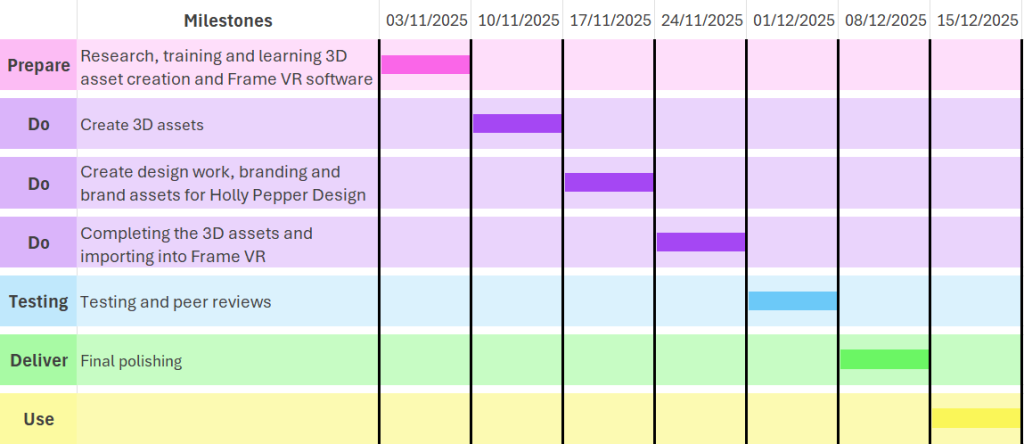
I intend on completing this project by Monday 15th December 2025, this allows 6 weeks to carry out this project. Below are 6 milestones that I would like to achieve on a weekly basis shown within a Gantt chart.
User Stories
Below are various user statements that show a wide range of possible audience interaction with my Frame VR exhibition.
“As an employer, I want understand Holly’s style of work, so that I know whether to hire her.”
“As a peer of Holly’s, I want to explore the design work, so that I can show support and give feedback.”
“As a visitor, I want visit the meditative room, so that I can feel clear and calm.”
Task Board
To keep a track of this project and help with the scope I have created a Trello board. Each list is a milestone with a due date and under each milestone are several smaller tasks that I need to complete for the project to succeed.
Concept Storyboard
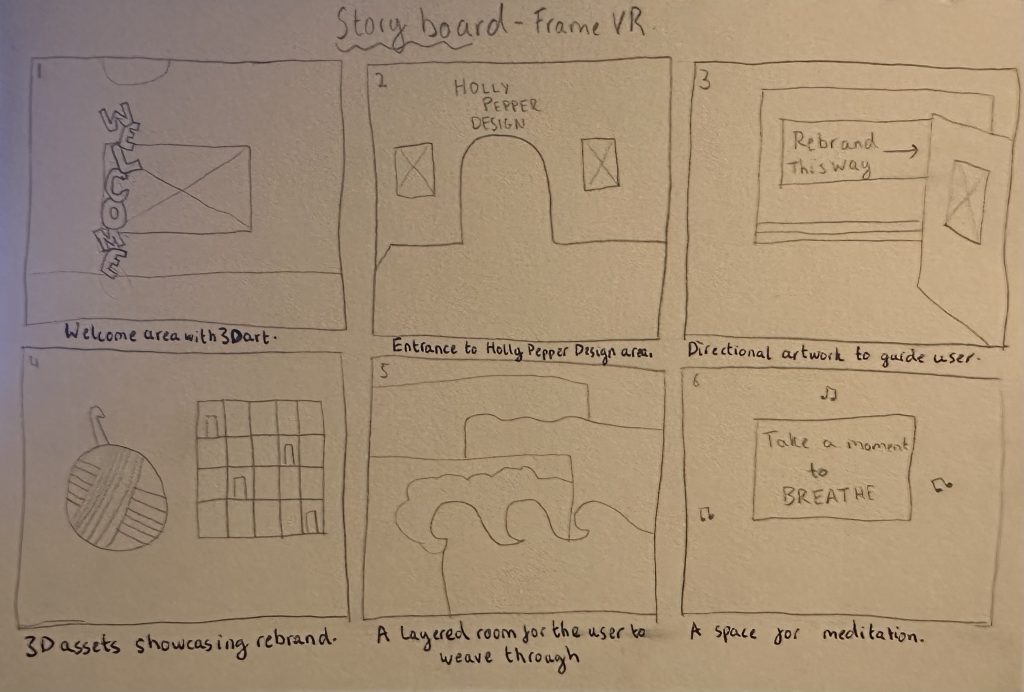
Before starting the storyboard, I sketched a floorplan of the Frame VR environment. I included the user journey with numbered X’s along the route to demonstrate where the user may stop to look. The floorplan includes the stud walls (drawn in pencil) used to create bespoke areas and layered rooms.
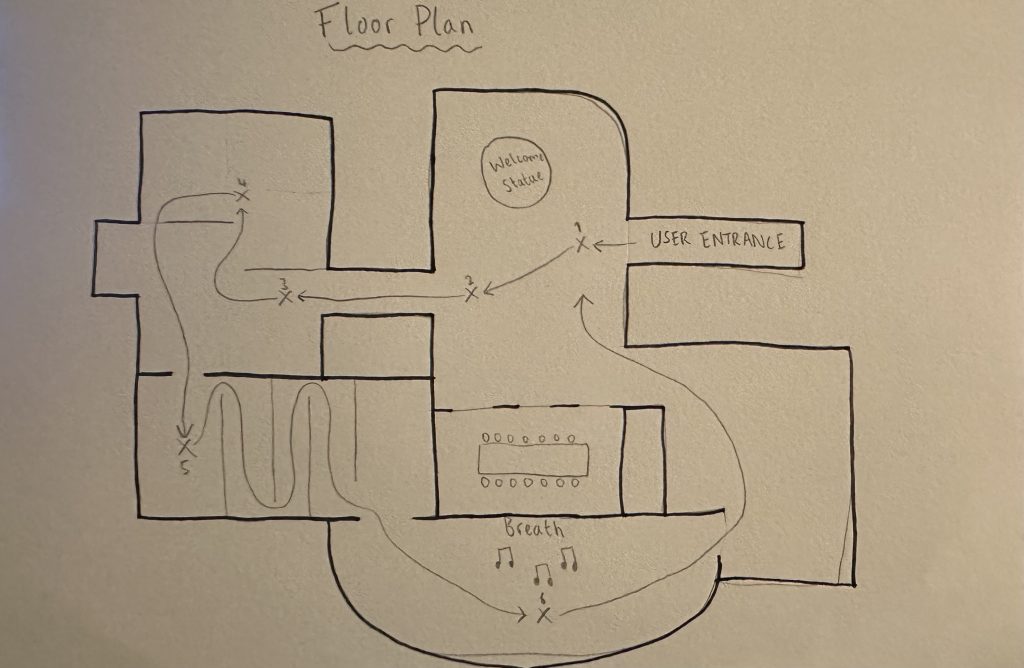
I sketched the storyboard, with each frame representing a numbered X on the user’s route through the floorplan. This shows the user’s journey through the environment from start to finish.
Reflection and Emerging Technology Justification
In conclusion, I have chosen to create an exhibition showcasing my design work and my exploration into emerging technologies in Frame VR. Web VR is my chosen technology to focus on because I struggled to find a good example of this programme being used and I want to prove that it is possible to use this software from a design aspect. Whilst the software is intuitive to use I will be challenging myself by bringing in my own 3D elements and creating bespoke display units for my work.
Web VR is an emerging technology because it is a part of extended reality and is merging the physical world with a virtual one. If utilised properly it has the potential to create social change, it can be used to create community spaces and could be extremely beneficial for users with mental illnesses, low confidence or physical impairments. It could allow these users to thrive in a community from the comfort of their homes.
Currently there are no major examples of web VR aligning with graphic design trends however, my aim is to create a space that is a clear demonstration of how this innovative software can be used within the graphic design industry. If the outcome of this project meets my expectations and aligns with my mood board and storyboards than this project will be successful to me.
References
Behance (2025) Centre Eaton x DALKHAFINE [Pinterest]. https://uk.pinterest.com/pin/585116176628260911/ [Accessed 29 Oct 2025].
Behnam, S. & Budiu, R. (2022) The usability of augmented reality. https://www.nngroup.com/articles/ar-ux-guidelines/ [Accessed 13 Oct 2025].
Bizbash (2025) Refine29’s multi-sensory playground [Pinterest]. https://uk.pinterest.com/pin/585116176628260927/ [Accessed 29 Oct 2025].
Creation Exhibits (2025) Homepage. https://www.creationexhibits.com/ [Accessed 29 Oct 2025].
Dot Dot Dash (2025) Craig & Karl cosmos [Pinterest]. https://uk.pinterest.com/pin/585116176628264788/ [Accessed 29 Oct 2025].
Dou (2025) Office spaces [Pinterest]. https://uk.pinterest.com/pin/585116176628264788/ [Accessed 29 Oct 2025].
Dupri Wells (2025) Moving graphic [Pinterest]. https://uk.pinterest.com/pin/585116176628260985/ [Accessed 29 Oct 2025].
Google (2024) Frame VR file capacity. https://www.google.com/search?q=frame+vr+file+capacity&rlz=1C1CHZN_enGB1028GB1028&oq=frame+vr+file+capacity&gs_lcrp=EgZjaHJvbWUyBggAEEUYOTIHCAEQIRigATIHCAIQIRigATIHCAMQIRigAdIBCTExMTE3ajBqOagCALACAQ&sourceid=chrome&ie=UTF-8 [Accessed 2 Nov 2025].
Hillmann, C. (2021) UX for XR: User experience design and strategies for immersive technologies. Springer.
Johnston, D. (2019) Making VR a reality [Blog post]. BBC Internet Blog. https://downloads.bbc.co.uk/aboutthebbc/internetblog/bbc_vr_storytelling.pdf [Accessed 13 Oct 2025].
Leitch, A. (2017) A storyboard for virtual reality. https://medium.com/cinematicvr/a-storyboard-for-virtual-reality-fa000a9b4497 [Accessed 14 Oct 2025].
Maria Hubner (2025) Hello creators [Pinterest. https://uk.pinterest.com/pin/585116176628260956/ [Accessed 29 Oct 2025].
Melanie Guinto (2025) Vintage diorama [Pinterest]. https://uk.pinterest.com/pin/4151824651687708/ [Accessed 29 Oct 2025].
Meta Quest (2019) Hold the world | rift [Video]. https://www.youtube.com/watch?v=nr3l98Omm-0&t=3s [Accessed 28 Oct 2025].
Meta Quest (2025) iHeart Radio album release party with Cage the Elephant. https://www.oculus.com/experiences/media/1144433509934067/?utm_medium=share&utm_source=oculus [Accessed 12 Oct 2025].
Peach Girl (2025) Pams stand [Pinterest]. https://uk.pinterest.com/pin/585116176628260937/ [Accessed 29 Oct 2025].
Pinterest (2025) Sweat now shine later [Pinterest]. https://uk.pinterest.com/pin/585116176628261025/ [Accessed 29 Oct 2025].
Pinterest (2025) Unbounded [Pinterest]. https://uk.pinterest.com/pin/585116176628260981/ [Accessed 29 Oct 2025].
Red Bull (2025) The edge Matterhorn VR. https://www.redbull.com/int-en/projects/the-edge-matterhorn-vr [Accessed 12 Oct 2025].
Snoop Zot (2025) Confettis window [Pinterest]. https://uk.pinterest.com/pin/585116176628261020/ [Accessed 29 Oct 2025].
Spatial.io (2025) Brands. https://www.spatial.io/brands [Accessed 2 Nov 2025].
Specsavers Official (2024) How to use our virtual try on tool | Specsavers UK [Video]. https://www.youtube.com/watch?v=Bc4hsw6x5Jo&t=38s [Accessed 28 Oct 2025].
Talon (2020) Pepsi Max unbelievable bus shelter augmented reality digital OOH | Talon OOH [Video]. https://www.youtube.com/watch?v=GB_qT6rAPyY&t=96s [Accessed 28 Oct 2025].
The London Display Company (2025) Gallery. https://www.thelondondisplay.com/gallery/ [Accessed 29 Sep 2025].
Tomorrow Ltd (2021) A tour of MACHINE-A & Institute of Digital Fashion’s augmented LFW filter [Video]. https://www.youtube.com/watch?v=axRqUIoacsM&t=60s [Accessed 28 Oct 2025]. Vandna Rano (2025) Lightbulb [Pinterest]. https://uk.pinterest.com/pin/585116176628261037/ [Accessed 29 Oct 2025].